


こんにちは from Tokyo!
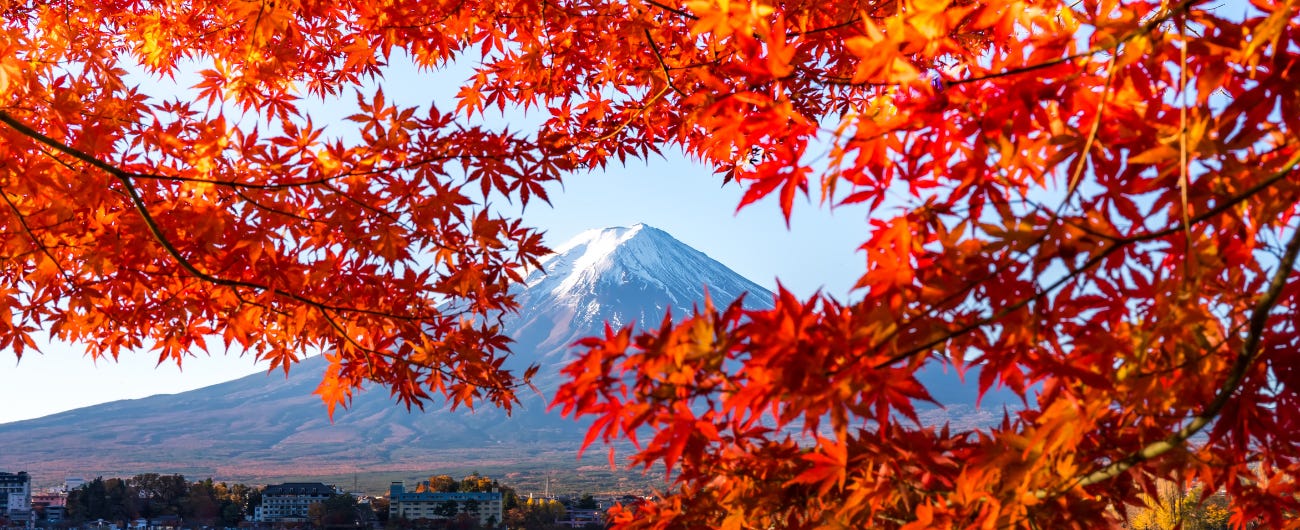
Autumn is finally settling in. The maples up north and in the mountains are starting to turn, and Kyoto and Tokyo usually catch up around late November.
In this edition: a new app that could change what happens when you show your disability card in Japan, an early heads-up for anyone spending New Year here with a food allergy, Josh’s look back at Tokyo 2020 five years on, and a 2023 favourite in Care for a Reshare.
🪪 Will Your Disability Card Work in Japan?
Show your disability card from home at a ticket window in Japan, and the answer often depends on who’s behind the counter. Discounts here are built around a certificate only residents can get, so staff have no way to check yours.

Mirairo ID, a Japanese app that shows your disability certificate on your phone, has just opened to overseas visitors. It’s an early first step. The roll-out is starting with businesses such as shops and restaurants, Mirairo hopes to add more travel destinations with time, and only 10 countries and regions can sign up so far (not yet the US, UK, Canada or Australia).
Read: Mirairo ID launches for overseas visitors
Not on the list yet? Our Disability Discounts in Japan guide explains what to expect at the ticket counter.
🎍 An Allergy-Friendly Osechi for New Year
Spending New Year in Japan with a food allergy?
Osechi, the beautiful tiered boxes of food Japanese families share over the first days of January, is one of the season’s loveliest traditions. It’s also one of the hardest to eat safely with allergies. Datemaki, the sweet rolled omelette found in almost every box, is mostly egg.
matoil, the Tokyo allergy-friendly food company behind the FOOD SAFE PASS allergy card we covered earlier this year, has opened orders for its 2027 osechi. Every dish is made without egg, dairy, wheat, peanuts, walnuts, almonds, cashews, macadamias or pistachios.
Some dishes do contain shrimp, soy, salmon, beef, pork, chicken, orange and peach, and the dessert tier includes apple, so check the full ingredient list before you order. If there’s a dish you can’t eat because of an allergy or dietary restriction, you can ask for a swap from the rest of the menu until 1 November. Choose the “ご相談あり” (consultation) option when you order, and matoil will email you with the next steps. The order page is in Japanese, so a browser translation tool will help.
There are two sizes. The two-tier box is ¥26,800. The three-tier box, which adds a full tier of desserts, is ¥35,800. Both prices include tax. A set of rice-flour noodles for your New Year’s Eve toshikoshi “soba” comes with every order. Order by 1 November and you’ll also get a set of rice-flour mini pizzas.
A few practical notes before you order. Everything ships within Japan only and arrives frozen on the morning of 31 December, so you’ll need a Japanese address. You’ll also need a fridge to thaw it overnight and a microwave or hot water to warm it up. If you’re staying in a hotel, check first that they can accept the delivery for you. Orders close 6 December, and they can’t be cancelled once paid.
New to matoil? Read more about their FOOD SAFE PASS allergy card.
🗼 Five Years After Tokyo 2020
When Tokyo won the Games, how many of the city’s train stations still had no step-free route? And how many were left by the time the Paralympics were over?

Josh went through the Tokyo Metropolitan Government’s own progress reports to find out. In his new piece, he also looks back on his torchbearer moment (a stair lift was involved), what he told reporters from NHK to Le Monde when they asked how Japan compares, and why he thinks the Games’ clearest legacy showed up in a different city altogether.
Read: Five Years After Tokyo 2020: What the Paralympics Left Behind
🆕New from Accessible Japan
1. Toba Seaside Hotel, Mie
Toba, on the Mie coast, is an easy base for Ise Jingu, the Meoto Iwa “wedded rocks”, Toba Aquarium and Mikimoto Pearl Island. Toba Seaside Hotel has one accessible twin room. Its large tiled bathroom has space to turn a wheelchair and a handheld shower on an adjustable rail, and a shower chair is available on request. The beds have 8cm of clearance underneath for a floor lift.

Two of the public baths are reached by ramp and have a bath wheelchair, and the buffet labels 12 allergens. One thing to note: the free shuttle from Kintetsu Toba Station only works if you can manage a few steps, because your wheelchair rides in the luggage hold.
With just one accessible room, confirm availability and the bathroom setup with the hotel before you book.
See the Toba Seaside Hotel listing
2. Accessible Taxis in Kumamoto, Aso & Amakusa
Our accessible taxi guides now reach Kyushu. The new Kumamoto page covers three providers for trips from Aso Kumamoto Airport, Yatsushiro cruise port and Kumamoto City, and out to Aso and Amakusa, where public transport is hard to use with a wheelchair. Your driver can even wait while you sightsee.
Local operators often run only one or two vans, so book early. When you do, send your chair’s width, length and weight.
Read: Accessible Taxis in Kumamoto, Aso & Amakusa
♻️ Care for a Reshare
From August 2023: Go Global: Traveling in Japan with a Mobility Scooter
In June 2023, Anne de Ridder took her first international trip with her three-wheel mobility scooter: nine days across Tokyo, Yokohama, Hiroshima and Osaka. She has MS, can walk short distances, and admits she was nervous before she went.

Her number one airport tip could save you half an hour at security on the way home. She also covers what shinkansen platforms are really like with a scooter, the day her charger travelled ahead to Osaka without her, and the one Osaka Castle activity she had to do without the scooter.
Some details will have changed since 2023, so check your airline’s current rules before you fly. But the spirit of her advice holds up, and it’s a lovely read if you’re nervous about a first big trip.
🔗 Useful Reminders
Bringing a scooter or power chair? Charging Your Wheelchair or Scooter in Japan covers voltage, plugs and adapters.
Heading to Kyoto for the leaves? Browse our accessible hotels in Kyoto.
Planning the whole trip? The Japan Accessibility Travel Kit (2026) puts hotels, transport, medication, equipment rentals and more in one place.
💡 Did You Know?
In Minoh, just north of Osaka, maple leaves aren’t only for looking at. Local shops salt them for about a year, then coat them in a sweet batter and deep-fry them into momiji tempura, a crunchy autumn snack sold near Minoh Falls. They’ve been selling it there for over a century.
The leaf itself tastes of almost nothing. Finally, a way to eat the scenery.
That’s all for this edition!
Before you go: which country would you most like to see Mirairo add next? And if you’ve ever shown your disability card from home at a ticket counter in Japan, how did it go? Leave a comment or head over to tabifolk. We’d love to hear your stories.
Until next time, The Accessible Japan Team