

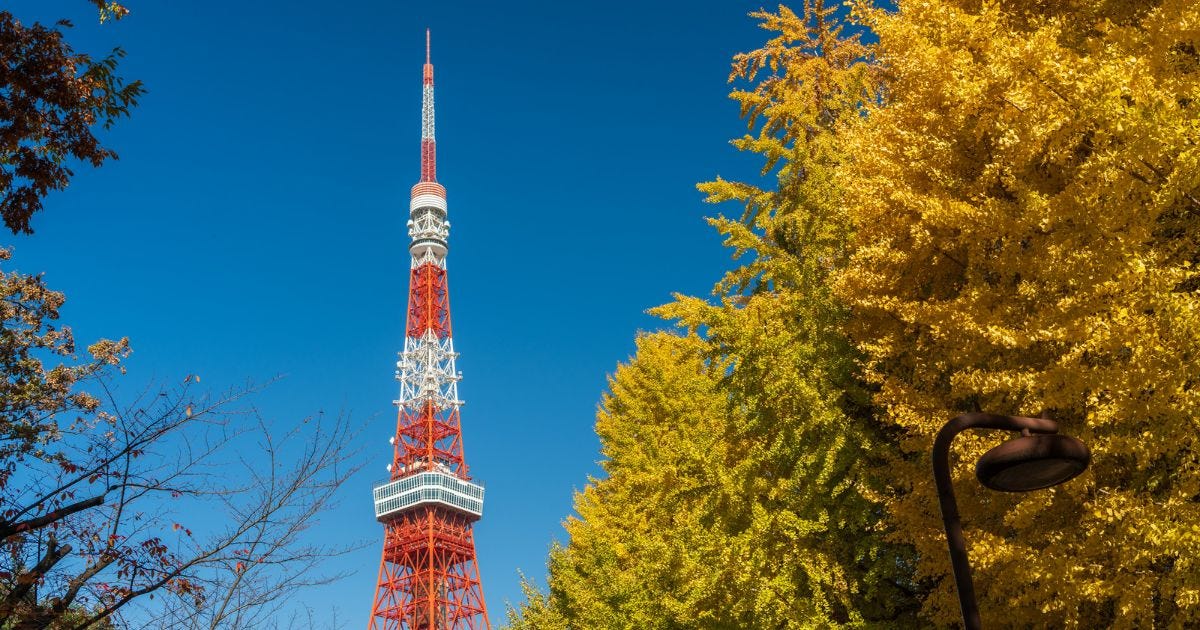
こんにちは from Tokyo!
The ginkgo trees along Tokyo’s avenues are turning gold, and the maples aren’t far behind. Heads-up if you’re travelling soon: Monday 23 November is Labor Thanksgiving Day, a national holiday, so expect a long weekend with busier trains and sightseeing spots. If you need an accessible taxi or a Shinkansen wheelchair space, book early.
Inside this edition: your chance to tell the Japan Tourism Agency what you need from hotel accessibility info, a Tokyo Station hotel you can reach without going outside, and tips from the founder of Eyes Japan on visiting with low vision or blindness.
Have Your Say on Hotel Accessibility in Japan
Ever booked a “barrier-free” room in Japan and still not known what you’d find in the bathroom?
The Japan Tourism Agency is running a survey on the accessibility information hotels in Japan give guests. The results will help improve that information.
It’s for people living outside Japan who use a wheelchair, mobility scooter, cane, walker, or other mobility aid, plus the family members, caregivers, and companions who travel with them. It takes about 15 minutes, it’s anonymous, and it’s hosted on SurveyMonkey.
Take the Japan Tourism Agency’s hotel accessibility survey
Hotel Spotlight: Hotel Metropolitan Tokyo Marunouchi
Ever arrived at Tokyo Station with bags in tow and wondered how far you’ll have to roll to reach your hotel?


Sitting on floors 27 to 34 of the Sapia Tower, this hotel connects directly to Tokyo Station’s Nihonbashi Exit, so you can get from the train to the front desk without going outside. The hotel offers six Universal rooms in two layouts and lends out free equipment, from shower chairs to bedside rails. One thing to know: the bathrooms have a bathtub with a handheld shower over it, so there’s no roll-in shower. You’ll find the room measurements and floor plans on the listing.
Find out more about Hotel Metropolitan Tokyo Marunouchi.
Need a roll-in shower for your stay? Our round-up of Tokyo’s high-end hotels that actually have one is a good place to start.
New on the Blog: Visiting Japan with Low Vision or Blindness

What do you do when you can’t check out a place before you visit? Lingyu Zhang has often given up on places he couldn’t check beforehand, and that’s part of why he built Eyes Japan. He lives in Osaka, has retinitis pigmentosa, and works as a network and web engineer, and his free service publishes accessibility guides for about 1,900 facilities in Japan, written for blind and low-vision visitors. In this piece, he shares his tips, from reading Japanese braille to why onsen are the hardest setting for him (and what he does about it), plus his favourite spots in Osaka and Kansai.
Read the full article about Eyes Japan.
Care for a Reshare
From March 2017: Traveling in Japan with a Visual Impairment
To go with this edition’s Eyes Japan piece, we’re bringing back one from the archives. Cristina Hartmann, who has both vision and hearing impairments, visited Tokyo and Sapporo at the end of a four-month round-the-world trip. She came away impressed by Japan’s tactile yellow guide strips, although Tokyo’s confusing layout and limited English signage made getting around difficult. Then there’s what happened to her white cane at the genkan… It was written in 2017, so some details may have changed, but it’s still well worth a read.
Useful Reminders
Did You Know?
Run your finger over the top of a can of beer or chūhai in Japan, and you’ll often feel a little row of raised dots. That’s braille, usually spelling おさけ, which just means “alcohol”, so blind shoppers can tell it apart from soda, coffee or tea. No law required it. The breweries started doing it themselves, so the wording varies: some cans just say “alcohol,” while others spell out the brand name. Sadly, none of them say “maybe make this your last one.”
If you haven’t done the Japan Tourism Agency’s hotel accessibility survey yet, it only takes about 15 minutes.
That’s all for this edition!
Until next time,
The Accessible Japan Team
A small tip from a Japanese reader: when asking hotels, “barrier-free room” or “universal room” often works better than “accessible.” Those are the words most Japanese staff know.