



こんにちは from Tokyo!
Welcome back to The Access Dispatch! We’ve had a busy few weeks at Accessible Japan, with new articles, new hotel content, and some genuinely exciting news to share about eating safely in Japan.
June means two things in Japan: tsuyu — the rainy season — and the start of the summer festival calendar. If you’re visiting or planning, there’s plenty to look forward to. And if you’re at home daydreaming about Japan, there’s plenty of fresh content on our site to help you get those plans moving. Let’s dive in!
Help shape accessible tourism
Tokyo’s Building Better Accessible Tours
Tokyo’s volunteer guide program wants to know what travelers with disabilities actually need from an accessible guided tour. Your answers shape what they build next.
🌧️ SEASONAL NOTE: Tsuyu (Rainy Season)
June marks the arrival of tsuyu, Japan’s annual rainy season, which typically runs from early June through mid-July across most of Honshu. If you’re heading to Japan this month, don’t let it put you off — it’s rarely a constant downpour, and the cooler, quieter atmosphere it creates can actually make sightseeing more pleasant for wheelchair users navigating usually crowded attractions.
A few quick tips:
Pack a compact umbrella — most convenience stores (konbini) stock them cheaply if you forget.
Wet floors can be slippery. Many indoor venues increase their floor-wiping frequency during the rainy season, but it’s worth slowing down in the entrance areas.
Crowds thin out. Many tourists avoid Japan in June, which means shorter queues, more space at popular sites, and easier navigation.
🎉 FESTIVAL SPOTLIGHT: Sanno Matsuri — Tokyo’s Great Summer Festival
2026 is a big year for this one!
One of Tokyo’s three great festivals, the Sanno Matsuri at Hie Shrine in Nagatachō runs through mid-June. Crucially, the full grand festival — including its spectacular Sanno Grand Parade — only takes place in even-numbered years, which means 2026 is the real deal.
The parade features over 500 people dressed in traditional Edo-period costume, carrying elaborate floats along a route that winds through central Tokyo. It’s an incredible piece of living history — and the route passes through some of Tokyo’s most accessible areas, making it watchable from street level.
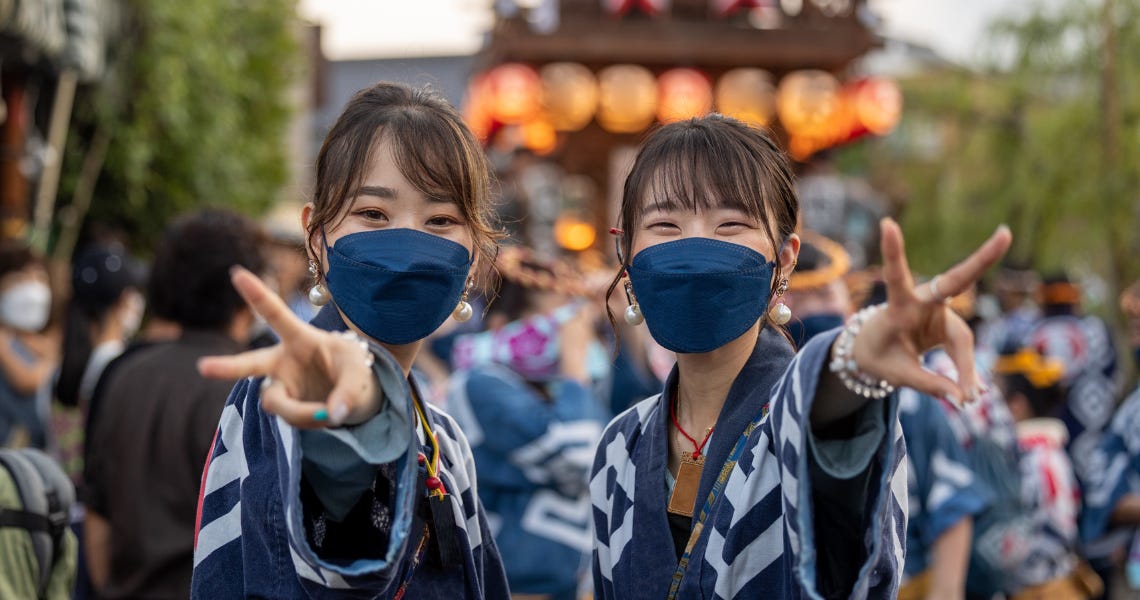
What about the shrine itself? Our listing on Accessible Japan covers this with honesty. Hie Shrine’s steep hill makes it very challenging for wheelchair users and those with mobility aids. However, escalators are available at some entrances, and much of the festival activity — including food stalls, communal dances, and the parade itself — takes place on surrounding streets where access is considerably easier. The Sanno Ondo bon odori dance event in the public square at Sanno Park Tower (nearby) is a particularly accessible option. The square is flat, open, and accompanied by taiko drums and food stalls — a genuinely inclusive festival experience.
👉 Read our Hie Shrine accessibility guide
🍽️ NEW ON THE SITE: Eating Safely in Japan — The FOOD SAFE PASS
Food allergies and dietary restrictions don’t always come up in conversations about accessible travel — but maybe they should. A recent survey found that nearly half of travelers with allergies or dietary restrictions have given up on a trip entirely because of food concerns. Japan’s restaurant scene, for all its brilliance, presents some specific challenges here that are worth understanding before you go.

We’ve written up a full breakdown of a new initiative from MIMARU and matoil that we think is genuinely worth knowing about — particularly if food safety is a factor in your travel planning.
📖 IN CASE YOU MISSED IT: “Yes, You Can Visit Japan.”
We know Japan can feel like a daunting destination — especially when you’re not sure how the accessibility stacks up. That’s why we love this recent piece on our site: “Yes, You Can Visit Japan: How to Navigate Tokyo and Beyond with a Disability.”
It’s the kind of article that’s perfect to send to a friend, family member, or carer who needs convincing — or reassurance — that Japan is genuinely worth it. Because it is.
🔗 USEFUL REMINDERS
A few resources worth bookmarking if you haven’t already:
Planning your trip: Our Japan Accessibility Travel Kit (2026) pulls together every essential resource in one place — SIM cards, transport, accessible hotels, tours, medications, equipment rentals, and community support. Think of it as your pre-trip checklist.
Need a specialist travel agent? Our Accessible Travel Agents directory lists agencies specialising in wheelchair-accessible tours, deaf-friendly travel, and support for a range of mobility and sensory needs.
Arriving by air? Our Haneda Airport accessibility guide covers everything from assistance services to getting into the city.
💡 DID YOU KNOW?
Japan is the only country in the world where a reigning emperor has voluntarily abdicated in living memory — Emperor Akihito stepped down in 2019, ushering in the Reiwa era under Emperor Naruhito. The word Reiwa (令和) is often translated as “beautiful harmony” — not a bad motto for a country that’s been quietly making enormous strides in accessible travel.
That’s it for this edition! Whether you’re already in Japan enjoying (or enduring) tsuyu, or planning your trip from afar, we hope there’s something in here that makes your adventure a little easier and a lot more enjoyable.
As always, if you have a hotel you’d like us to look into, or a story to share from your own accessible travels in Japan, drop us a comment or head over to tabifolk.com — our community is always happy to hear from fellow travelers.
Until next time, The Accessible Japan Team