



Tottori often flies under the radar. As Japan’s least populated prefecture, it doesn’t have the frantic energy of Tokyo or the crowded shrines of Kyoto. But to be honest, that is exactly what makes it a great place to visit.
This was my second visit; I first traveled here in 2020 to explore the famous sand dunes and see some of the region’s emerging accessibility features. When I was invited to return this year – this time to meet with local accessible travel providers and give a seminar on accessible travel – I was excited to go back and unwind.
For those who want a bit of background, you can check out my earlier Tottori article on Accessible Japan. Consider this post a continuation – a deeper dive into the progress, the people, and the places that make Tottori such a special destination on Japan’s western coast.
Getting There: The New Yakumo Limited Express
While most guidebooks suggest flying into one of Tottori’s two airports, for travelers already exploring western Japan, the train is a fantastic option. On this trip, I connected via Okayama Station and boarded the Yakumo Limited Express.
If you visited Tottori in the past, you might remember the old Yakumo as a bit of a bumpy ride. However, the new 273 series trains (introduced in 2024) are a massive upgrade. The accessibility is excellent, with dedicated wheelchair spaces. One space is positioned next to a standard seat, allowing a wheelchair user to transfer if they wish, or simply sit side-by-side with a travel companion as well as two spots with close access to the windows. There is also a large accessible toilet available in this part of the train.
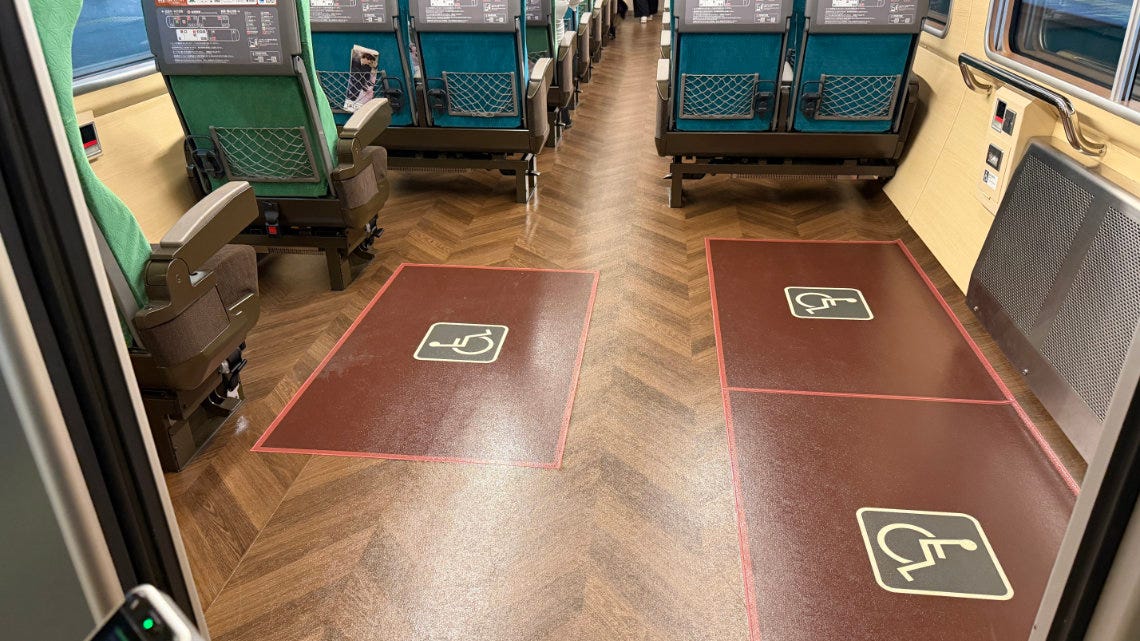
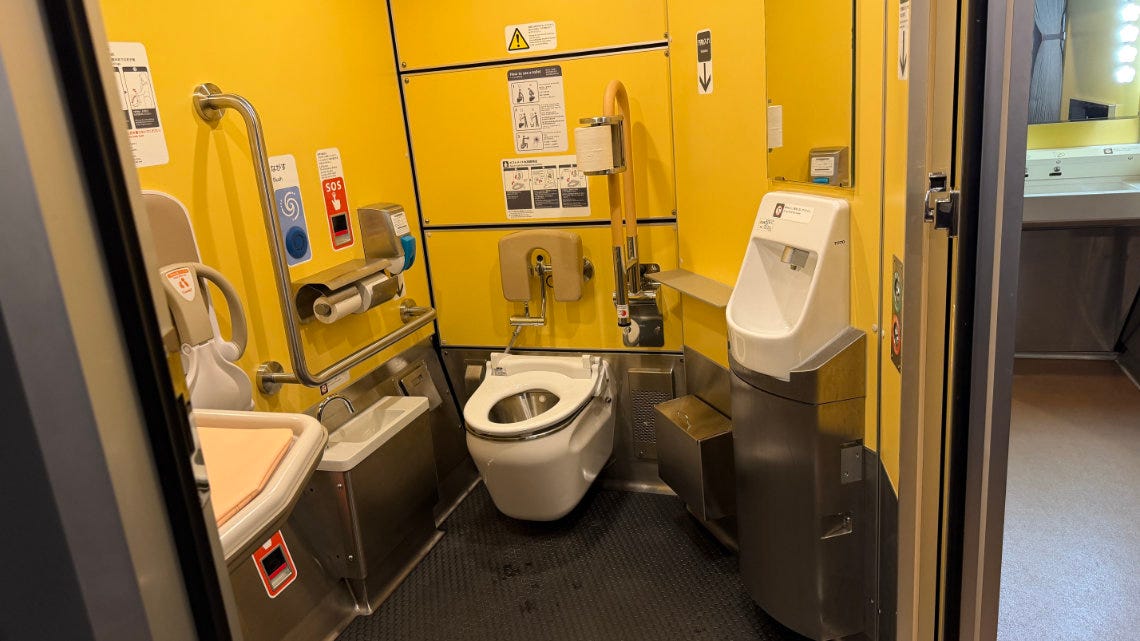
A quick note for those with sensitive stomachs: The Yakumo is a “tilting train” designed to maintain speed through the winding Chugoku mountains. The new models use a smoother tilting system, but it still moves with a gentle sway that is worth knowing about beforehand.
Day 1: Monsters and Modern Hospitality
My first stop was in Sakaiminato to visit the Mizuki Shigeru Museum. Even if you aren’t familiar with the name, you have likely seen his characters – the yokai (monsters) from GeGeGe no Kitaro.
